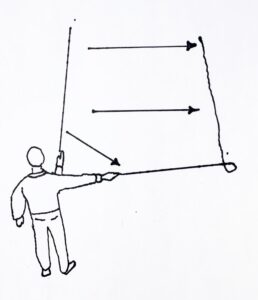
 The purpose of the reach mend is to allow the caster to present the fly to the fish in a drag-free fashion. In other words, the fish sees the fly before the leader and fly line. The upstream mend can be performed with or without shooting line and is usually done to position the fly to a fish holding across or downstream.
The Fly Fishers International definition of an aerial reach mend is the manipulation of the fly line layout by moving the rod after the initial rod stop on the delivery cast and before the line or leader touches the water.
Shooting line on the delivery cast allows the fly fisherman to false cast without the fly and line passing over the fish. The angler can shoot extra line on the delivery cast to allow for repositioning of the fly rod and still have the fly land in the desired position.
Shooting line might also be helpful when casting to a fish holding next to the opposite bank. Obstruction such as trees or a high bank behind the fish might prevent false casting the necessary amount of line for a standard aerial mend.
A few of the more common errors I see when teaching the aerial reach mend include:
- A delay in repositioning the rod for the mend following the rod stop of the delivery cast: The angler is left with an ineffective mend because the distal portion of the line lands straight ahead, and only the more proximal part of the line closest to the angler is positioned upstream for the mend. The fly, leader, and line would start to drag immediately. Once the rod stops on the delivery cast, one needs to immediately reposition the tip of the fly rod upstream.
- Not sufficiently repositioning the rod at the end of the delivery cast to make the mend: A more effective mend would be to reposition the rod almost 90° from the direction of the delivery cast. This allows for a much bigger upstream mend.
Doc Frangos
FFI Master Certified Casting Instructor
January 2026