Seminar in Clinton, Mississippi

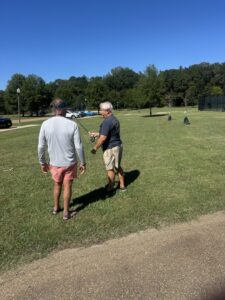
Seminar in Clinton, MSThe Gulf Coast Fly Fishing Club members were asked several months ago about conducting a seminar on casting for the Magnolia Fly Club in Clinton, MS. On October 9, 2025, Tom Dempsey and Richard Montgomery journeyed to Clinton, MS, to run a seminar on casting for the Magnolia Fly Fish Club. There were 14 who received a packet of information and brochures produced by the GCFFS on various topics of casting.

It was a beautiful day in Clinton, MS, for our gathering at Brighton Park.  The topics covered were the pickup and laydown, roll casting, casting with opposite shoulder, and shooting line.  In addition, there were several breakout sessions done to help individuals with some of the problems the members were having.

Seminar in Clinton, MSAfter the morning session, a lecture was given on “The 5 Essentials of Fly Casting” and a fly casting quiz was given to the members with cash prizes for the winners.  After the afternoon session, everyone gathered and gave some feedback on the seminar.

From the participants it was a huge success and followed the principles of GCFFS to continue education and to participate in local events that help our fellow anglers to become better casters and fishermen.

The Rio Grande Rumble

Rio Grande Rumble 2025

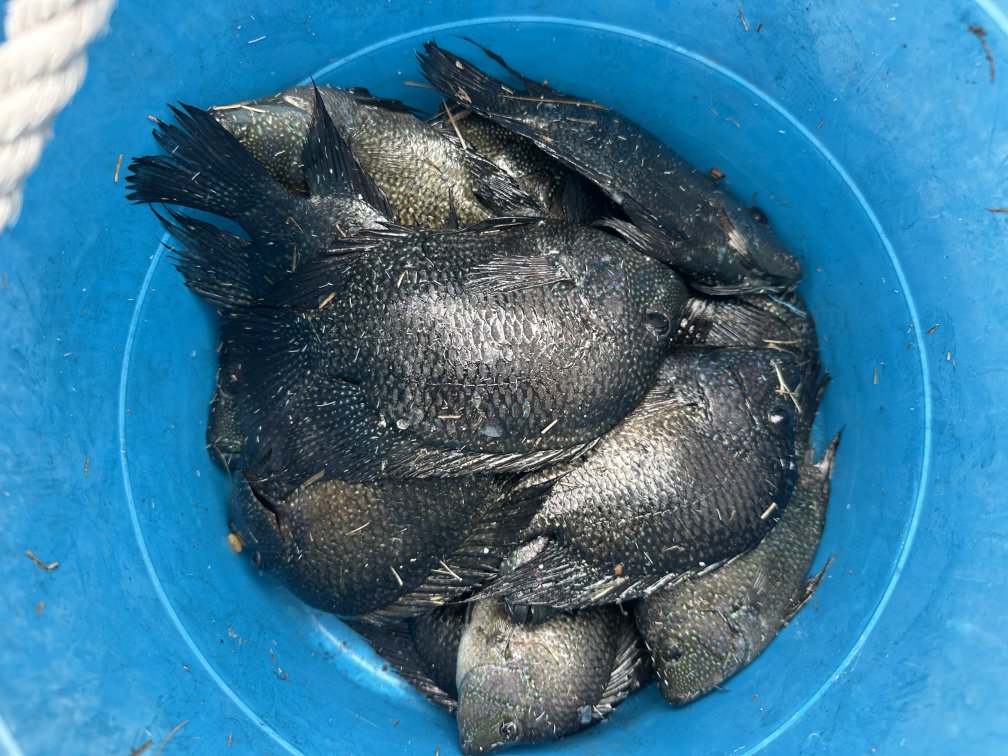
Every year for the past 7 or 8 years the New Orleans Fly Fishing Club has hosted a fishing tournament to remove the invasive species Cichlid Rio Grande from the canals and streams in the New Orleans area.  This fish was thought to be introduced into Florida waters from Texas in 1941 and the first species was caught in New Orleans in 1989.  It was thought to have been released from someone’s aquarium.   In 1996, the first recording of any significant catches was made of the Rio Grande Cichlid and now they have become a nuisance, crowding out the native fish in the canals and streams around New Orleans.  They seem to be prevalent in the city park, Lake Pontchartrain and Bayou St. John.

This is the only Cichlid that is found in the U.S.  Cichlids are basically overgrown goldfish.  The most common one that most anglers are familiar with are Peacock Bass which are found in Brazil.  They are extremely territorial and tend to run out native fish.  They are voracious eaters and will eat anything from carnivorous to vegetarian.

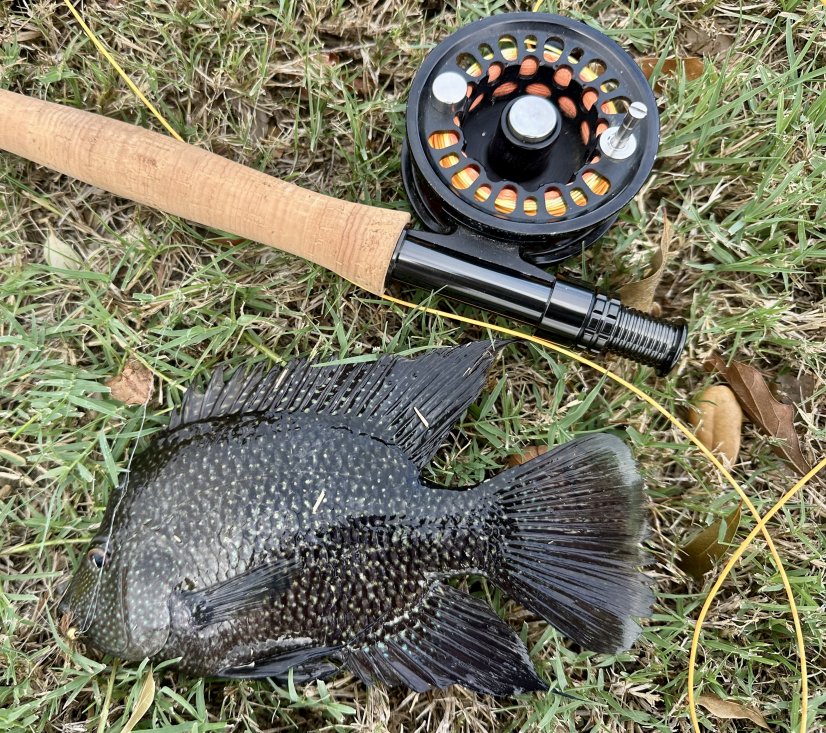
About 6-10 inches long at the most, these little fish show a purplish iridescent scale that changes color in the sunlight. 

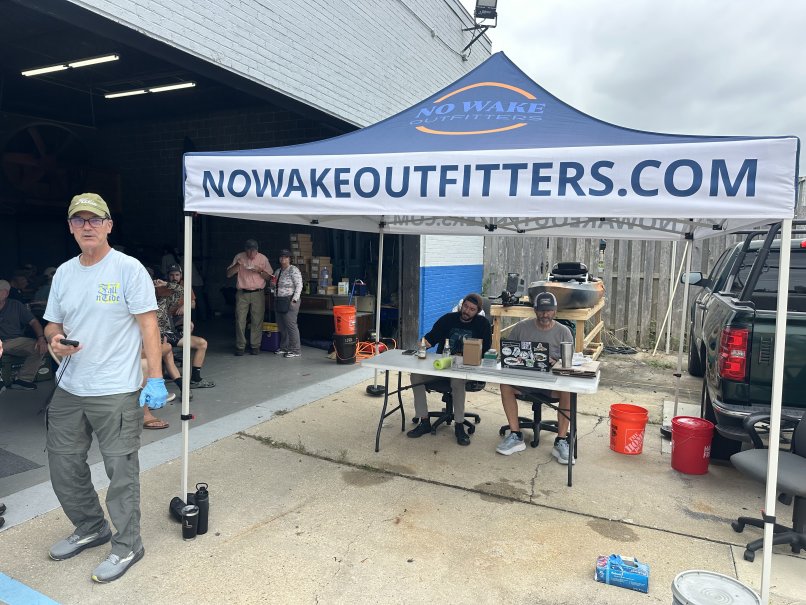
They will readily take a fly which has made the Rio tournament in New Orleans a special event every fall.  This year 285 Rios were caught by some 30 anglers. The headquarters was the No Wake Outfitters hosted by A.J. Rosenbaum. After the weigh in at noontime, everyone told their fish stories and enjoyed a meal of Jambalaya.

This is a very unique tournament and should be put on your bucket list if you live anywhere halfway convenient to New Orleans.  Remember the Rio Grande Rumble.

Idaho Autumn Trico Fishing

During September mornings a Trico hatch on the Upper Teton River is predictable and consistent. Once the ambient air temperature reaches the mid-sixties the hatch turns on.

The river water is crystal clear with September flow rates around 200 cfs. When casting to trout under these conditions the presentation has to be perfect. The fish have ample time to study the imitation for an appropriate drag-free drift, size, and shape. Do not let the slow flow rate fool you, these conditions require much more technical prowess than fishing in faster water such as the South Fork of the Snake River.

Until this summer when I saw tricos in the air or on the water, I limited myself to dun and spinner patterns for rising fish. Recently, my experienced fly fishing partner suggested that prior to a predictable hatch, this is the perfect time to consider a trico emerger. Using a size 22-24 emerger on 6x tippet proved to be an effective pattern. I put on a second larger dry fly as an indicator about 18 inches proximal to the trico with 5x tippet.

Once spent spinners are seen on the water and you see the characteristic surface feeding frenzy, switch to a spinner pattern.

Too often, we dry fly enthusiasts become enamored with parachutes and spinners. If you are not seeing a lot of surface action consider an appropriate emerger pattern.

Doc Frangos, MCI
Victor, ID
September 2025